

Walking with God
Series:
New Testament
Book:
Ephesians

Rev. Budy Setiawan
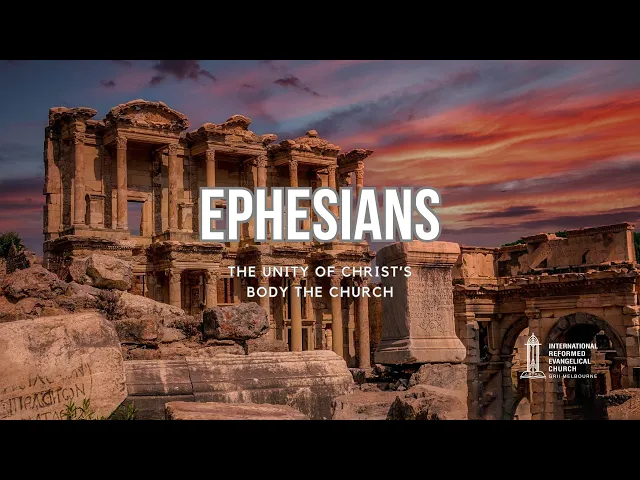
The sermon continues an ongoing exposition of Ephesians, arriving at chapter 5, verses 3 through 7, read against the backdrop of chapter 4's call to walk in love as Christ loved us. The preacher opens with a recent news story about a female teacher who groomed and sexually abused a female student beginning at age twelve, a relationship that continued for years without anyone — including the girl's own parents — suspecting anything, partly because a woman abusing a girl seemed almost unthinkable to those around her. The survivor's own conclusion, "a predator is not a male or a female," becomes the entry point into Paul's warning: the sermon argues that we live in an age that has normalized sexual freedom to the point that impurity in film, advertising, and everyday conversation barely registers as scandalous.
Paul's words in verses 3-5 are severe: there must not even be a hint of sexual immorality, impurity of any kind, or greed among believers, because no sexually immoral, impure, or greedy person — that is, an idolater — has any inheritance in the kingdom of Christ and God. The sermon poses the obvious question this raises for Christians who already believe themselves secure in Christ, born again, and seated among God's beloved children: what exactly is Paul warning against? The answer turns on a mistranslation. The Indonesian text of 1 John 3:9 renders "he cannot keep on sinning" as simply "he cannot sin" — a rendering that, taken literally, would be devastating, since every believer, including biblical figures like Abraham and David, still falls into sin. The ESV's "he cannot keep on sinning" carries the more faithful sense: the mark of true new birth is not sinlessness but the inability to remain settled and undisturbed in sin. A genuine child of God, confronted with sin, is convicted, grieved, repents, and returns to the Lord; the person who calls himself a Christian yet stays comfortable in ongoing, unrepentant sin — even after repeated correction — reveals that he was never truly born again, echoing 1 John's language about those who "went out from us because they were not of us."
This is why Paul's language moves from behavior to identity: "no sexually immoral, impure, or greedy person" describes not an isolated act but a settled character, someone whose Christian profession is only external, paralleling the "sons of disobedience" described earlier in Ephesians 2. Psalm 1 supplies the same progression — not walking in the counsel of the wicked, not standing in the way of sinners, not sitting in the seat of mockers — a gradual descent from merely passing by, to lingering and watching, to finally sitting down and becoming indistinguishable from the crowd of the wicked. The sermon stresses that this warning is meant to steady genuine believers while unsettling anyone who is only nominally Christian, since the whole church, not a canonized elite (illustrated by a pointed aside about the Catholic Church elevating a teenage gamer-influencer as a "patron saint" to reach Gen Z), is called "saints" set apart in Christ — even the deeply compromised church at Corinth is addressed this way. To live in habitual impurity is therefore likened to the child of the wealthiest restaurant owner in the world who insists on eating out of the garbage every day: a contradiction not only of God's will but of one's own identity as His child.
Practically, Paul locates the doorway into sexual sin in speech: obscene, empty, or "coarse joking" talk (v. 4). The sermon illustrates this with a cautionary account of a married man and woman serving together on a church visitation team whose increasingly suggestive joking during shared car rides eventually led to an affair — evidence, the sermon argues, that the entry point into sexual sin is rarely dramatic but begins in careless, joking words. Paul contrasts this with thanksgiving (vv. 18-20): being filled with the Spirit, singing psalms and hymns to one another, making music in the heart, giving thanks always. Thanksgiving is the opposite posture of the heart, expressing trust that God is sovereign and good, while impurity and greed — explicitly named idolatry in verse 5 — betray a heart seeking satisfaction somewhere other than God. Jeremiah 2:12-13's image of forsaking the fountain of living water to dig leaking cisterns, together with the Samaritan woman's five failed marriages, illustrates the same futile, self-destructive search; true ministry and joy, the sermon argues, flow from an overflowing relationship with God rather than a leaking bucket that quickly runs dry.
The sermon closes with an image drawn from Pastor John Oh of Sarang Church: picturing the prodigal son seated at the edge of his own welcome-home feast, watching the celebration, and realizing how foolish he had been to imagine that leaving his father's house would bring him greater joy. His grief over having wounded his father's heart mirrors what every believer should feel about sin — not only rebellion against God's will but self-destruction — and that recognition, the sermon concludes, should produce both repentance and deep gratitude toward a Father who withheld nothing, not even His own Son, for us.
Bible Verses Used
Ephesians 5:3-7: The sermon's main text — no sexually immoral, impure, or greedy (idolatrous) person has an inheritance in the kingdom of Christ and God, and such things bring God's wrath on the disobedient.
Ephesians 4:1-2: Cited as immediate context, calling believers to walk in love as Christ loved us and gave himself for us.
Ephesians 2:1-3: Parallel language about "sons of disobedience" among whom believers once lived, used to explain who the warning in chapter 5 targets.
1 John 3:9: Central to resolving the sermon's key question — "he cannot keep on sinning" (not "cannot sin") distinguishes occasional falling from habitual, unrepentant practice of sin.
Psalm 1:1: Used to picture the progressive descent into sin — walking, then standing, then sitting among the wicked until indistinguishable from them.
Jeremiah 2:12-13: The image of forsaking the fountain of living water for leaking cisterns, applied to seeking satisfaction outside of God.
John 4 (the Samaritan woman): Referenced alongside Jeremiah as an illustration of searching for satisfaction in relationships rather than in the living water Christ offers.
Read more
Previous
Learning in Silence Part 3
Next
